Exterior · Sandpoint, Idaho
Deck Building in Sandpoint, ID
Decks built for North Idaho snow loads and lake views, wood or composite, with footings below frost depth and framing sized for the weather.
What Deck Building Covers
Deck building covers both new decks and deck replacement. A new deck starts from the ground up: footings, posts, framing, decking, railings, and stairs, all sized and placed for how you'll use the space and what the site demands. A deck replacement means tearing out a deck that's past its time and rebuilding it right.
How you'll use the deck shapes the design, whether that's dining, lounging, a hot tub, a view platform over Lake Pend Oreille, or a simple entry deck off the back door. Each use points to different sizes, framing, and railings, and we talk through that with you.
A deck in North Idaho is a structure that has to stand up to snow, sun, and moisture, so the build is about more than the boards on top. Footings, framing, and connections are where a deck either lasts or fails.
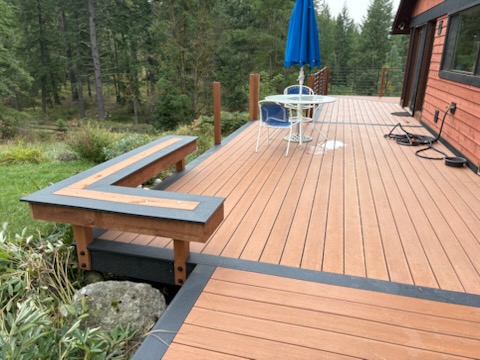
Built in deck bench
Why Snow Load Matters on a Deck Here
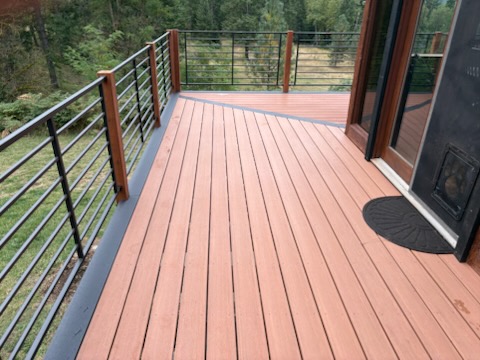
Metal railing with wood posts
Why Snow Load Matters on a Deck Here
Snow load is the big one. A deck in Bonner County has to hold the weight of a winter's snow on top of it, and that's a structural question, not a cosmetic one. Framing gets sized for the load, spans get kept within limits, and the connection to the house gets done so the deck stays put when it's buried.
Footings go below frost depth so freeze and thaw can't heave them, and the whole assembly is built to shed moisture instead of trapping it. Lakefront decks add exposure to humidity and splash on top of the snow. We build for the actual conditions your deck will sit in.
Wood Versus Composite Decking, Honestly
The decking choice is usually wood versus composite, and we lay out the real trade offs rather than pushing one. Wood costs less up front and has a look many homeowners love, but it needs regular staining and sealing and it takes more upkeep through sun, snow, and moisture. Composite costs more up front and needs far less upkeep, and it handles snow, sun, and moisture without the same maintenance cycle.
How each handles North Idaho weather is part of the conversation: snow sitting on the surface, sun bleaching it over years, and moisture from rain and lake exposure. We talk through cost, upkeep, and how each material behaves here so you can choose with your eyes open.
Railings, stairs, and the decking fastening system all get chosen to match the material and the use. The goal is a deck that fits the house and the view and that you'll actually want to spend time on.
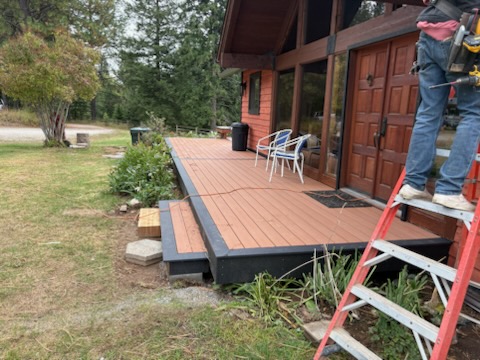
Deck walkway
Permits, Footings, and How a Deck Build Works
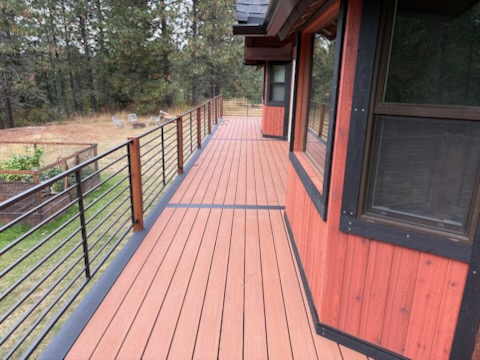
Deck build in progress
Permits, Footings, and How a Deck Build Works
A deck usually needs a building permit, and the rules depend on whether your home is inside city limits or in unincorporated Bonner County. We talk through what applies to your location during your estimate, along with footings, frost depth, and any railing or stair requirements.
You start with a call or estimate request and talk to the builder. We walk the site with you, look at the grade and the connection to the house, and listen to how you want to use the deck. Then you get a clear written scope. As a small, owner run company we schedule a limited number of projects, and we walk the finished deck with you before we're done.
More Deck Projects
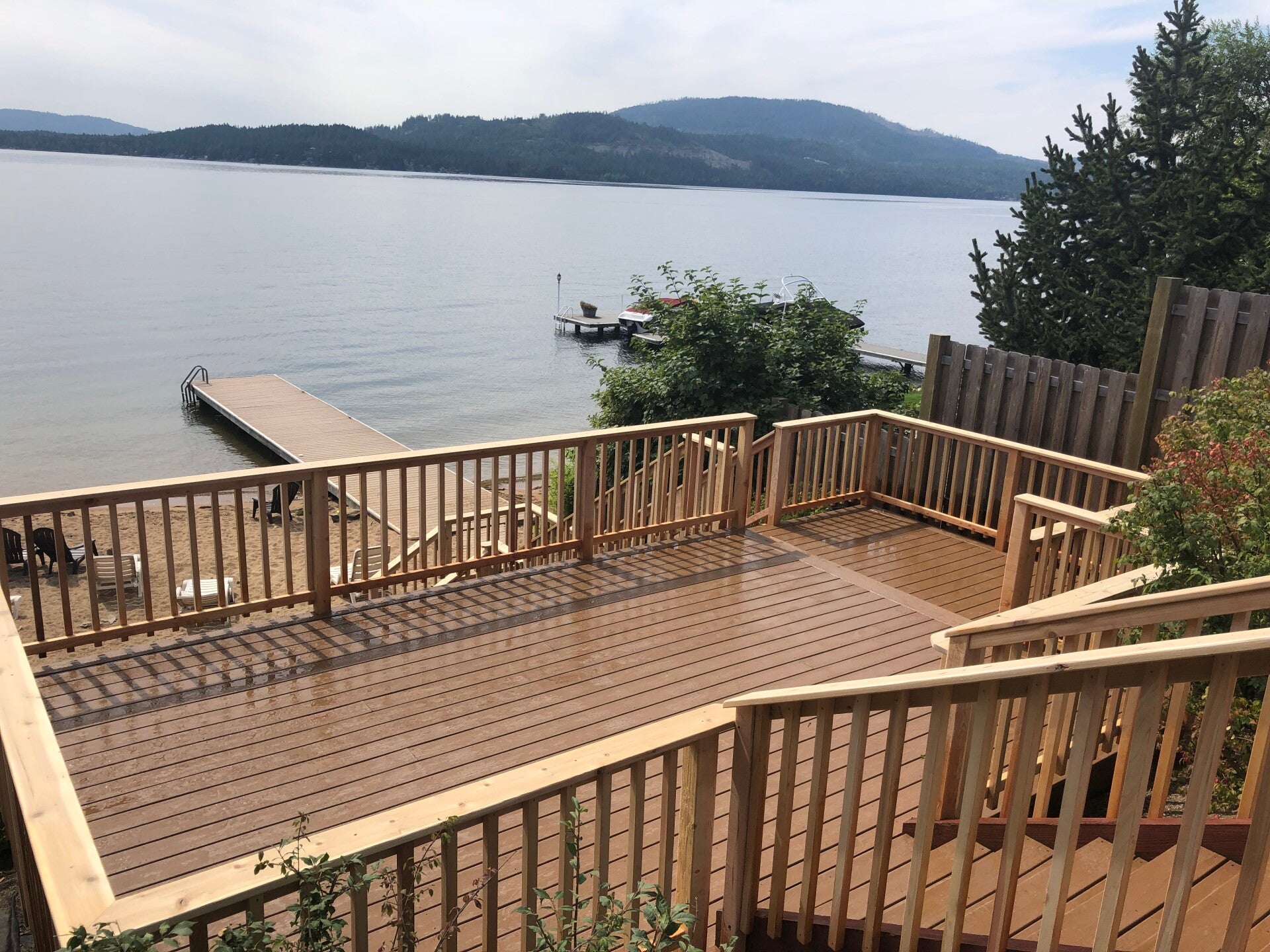
Lakefront deck with wood railings
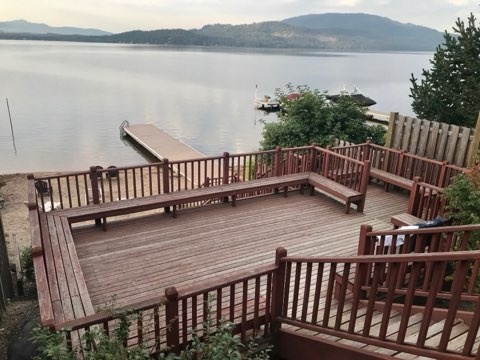
Lake view deck with built in benches
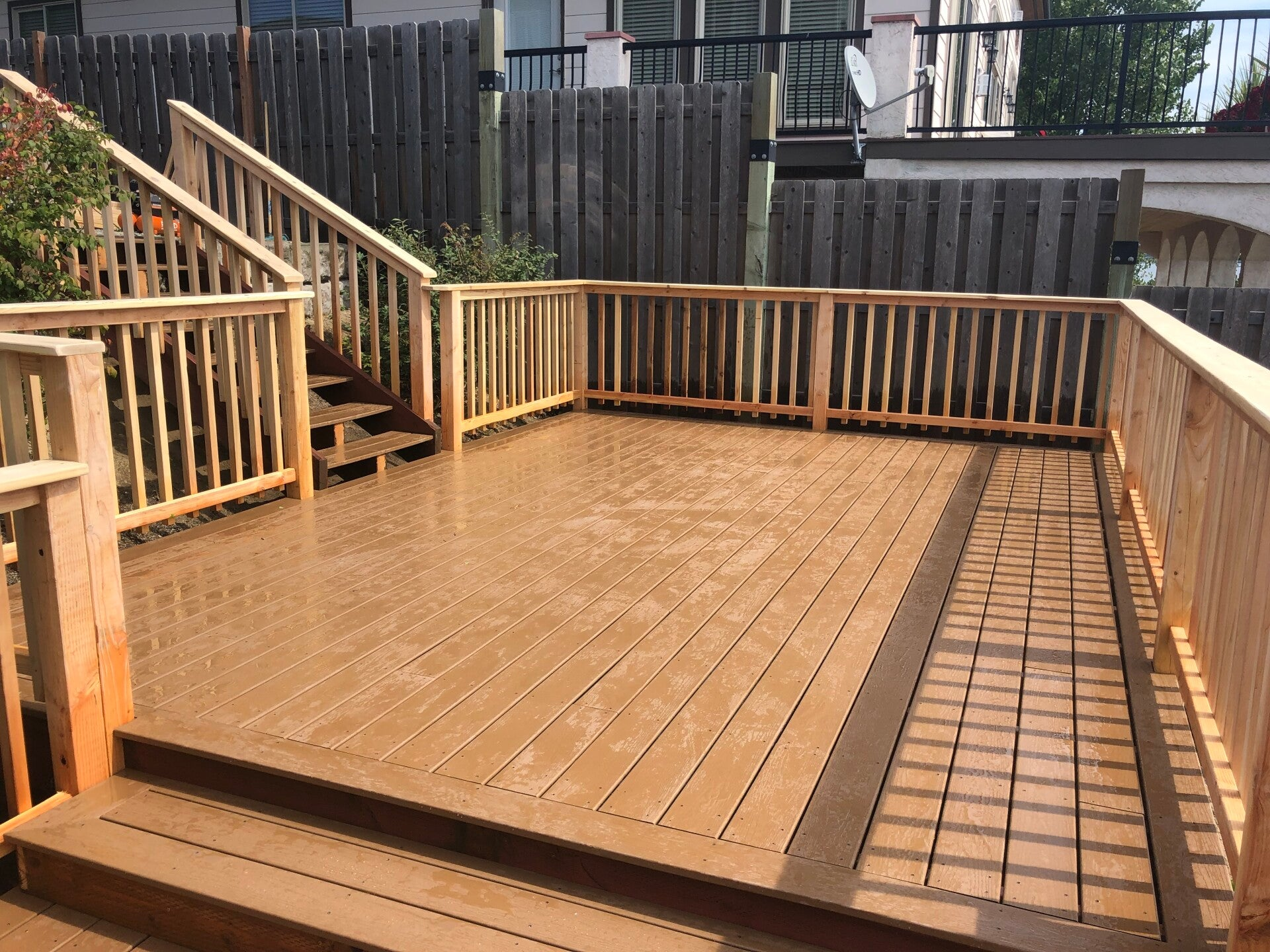
Wood railings and stairs
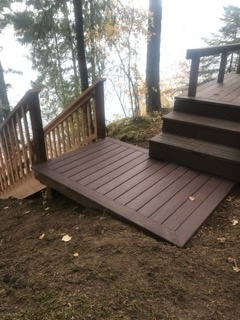
Deck stairs and landing
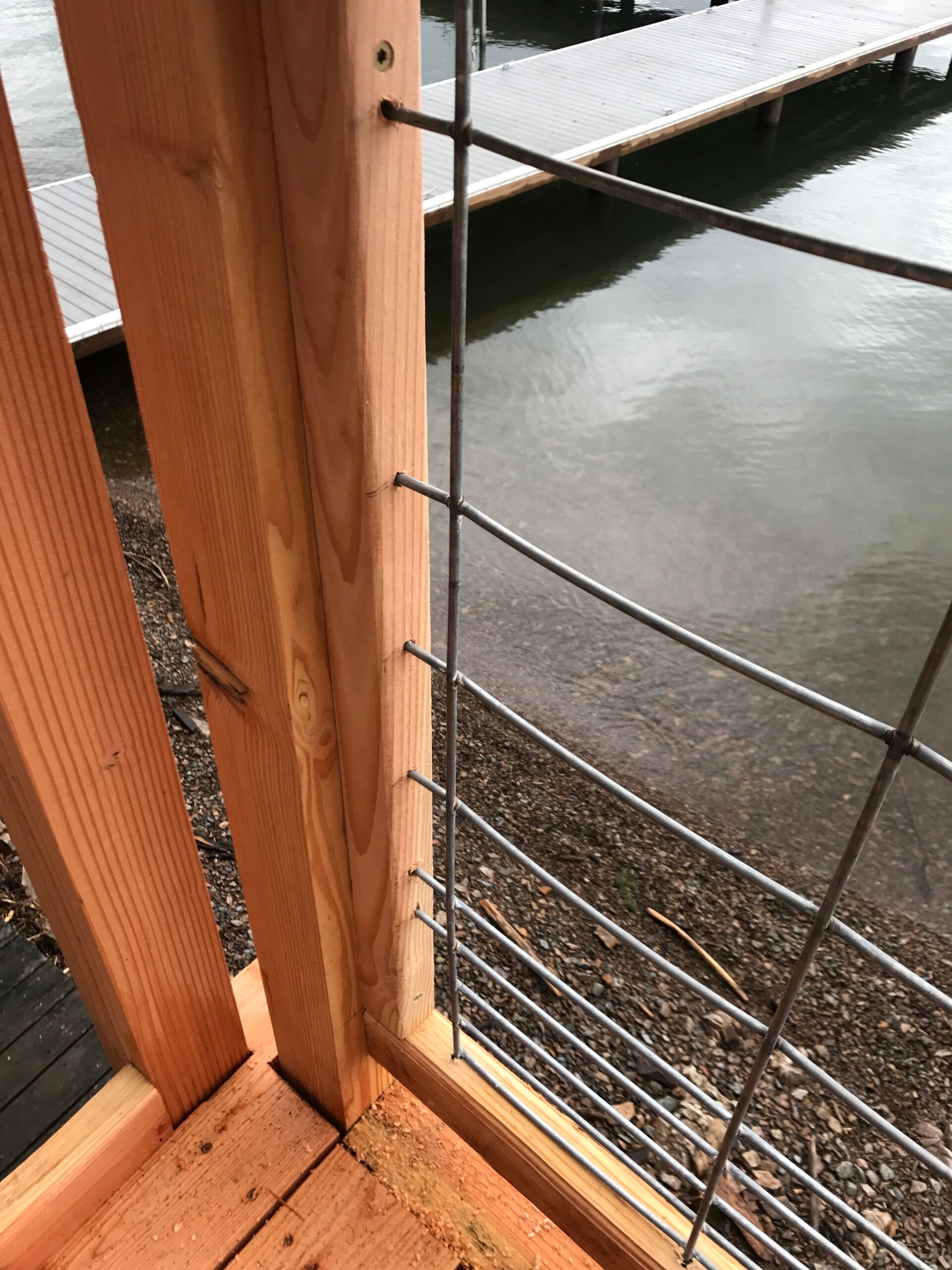
Railing detail
Signs It's Time for Deck Building
- Your current deck has soft boards, loose railings, or visible rot
- Posts or footings have shifted, heaved, or pulled away from the house
- You have a view or a door with no deck to step out onto
- The deck is too small or laid out wrong for how you want to use it
- Stairs or railings feel unsafe or no longer meet your needs
Deck Building Questions, Answered
Does a deck need a building permit in Bonner County?
A deck usually needs a building permit, and the rules depend on whether your home is inside city limits or in unincorporated Bonner County. We talk through what applies to your location during your estimate.
Wood or composite decking, which should I choose?
We lay out the real trade offs: wood costs less up front but needs regular staining and sealing; composite costs more up front but needs far less upkeep. We talk through cost, upkeep, and how each handles snow, sun, and moisture here so you can choose.
How deep do deck footings need to go in North Idaho?
Footings go below frost depth so freeze and thaw can't heave them. The exact depth depends on your site and local requirements, and we cover that when we walk the project.
Can you build a deck for a hot tub or a lake view?
Yes. How you'll use the deck shapes the design. A hot tub means framing sized for the extra load, and a view deck means layout and railings chosen to keep the sightline. Tell us how you want to use it and we plan around that.
Do you replace old decks, or only build new ones?
Both. A deck replacement means tearing out a deck that's past its time and rebuilding it right, with proper footings and framing. If your current deck has soft boards, loose railings, or heaved footings, replacement is often the right call.
Wood or Composite? Find Your Fit
Step 1
How much upkeep are you willing to do?
Step 2
How does the deck get sun and snow?
Step 3
What matters most?
Every deck is different. We'll look at your site and give you a straight answer.
Want the full version with a side-by-side comparison? Open the Deck Material Guide.
Where We Build in Bonner County
Based in Sandpoint and working across Bonner County, from Priest River to Clark Fork. Find your town:
Request an Estimate
Tell us about your deck building project. We'll call you back to set up a time to see it.
Call (208) 946-3944Request an Estimate
Tell us about your project. We'll call you back to set up a time to see it.